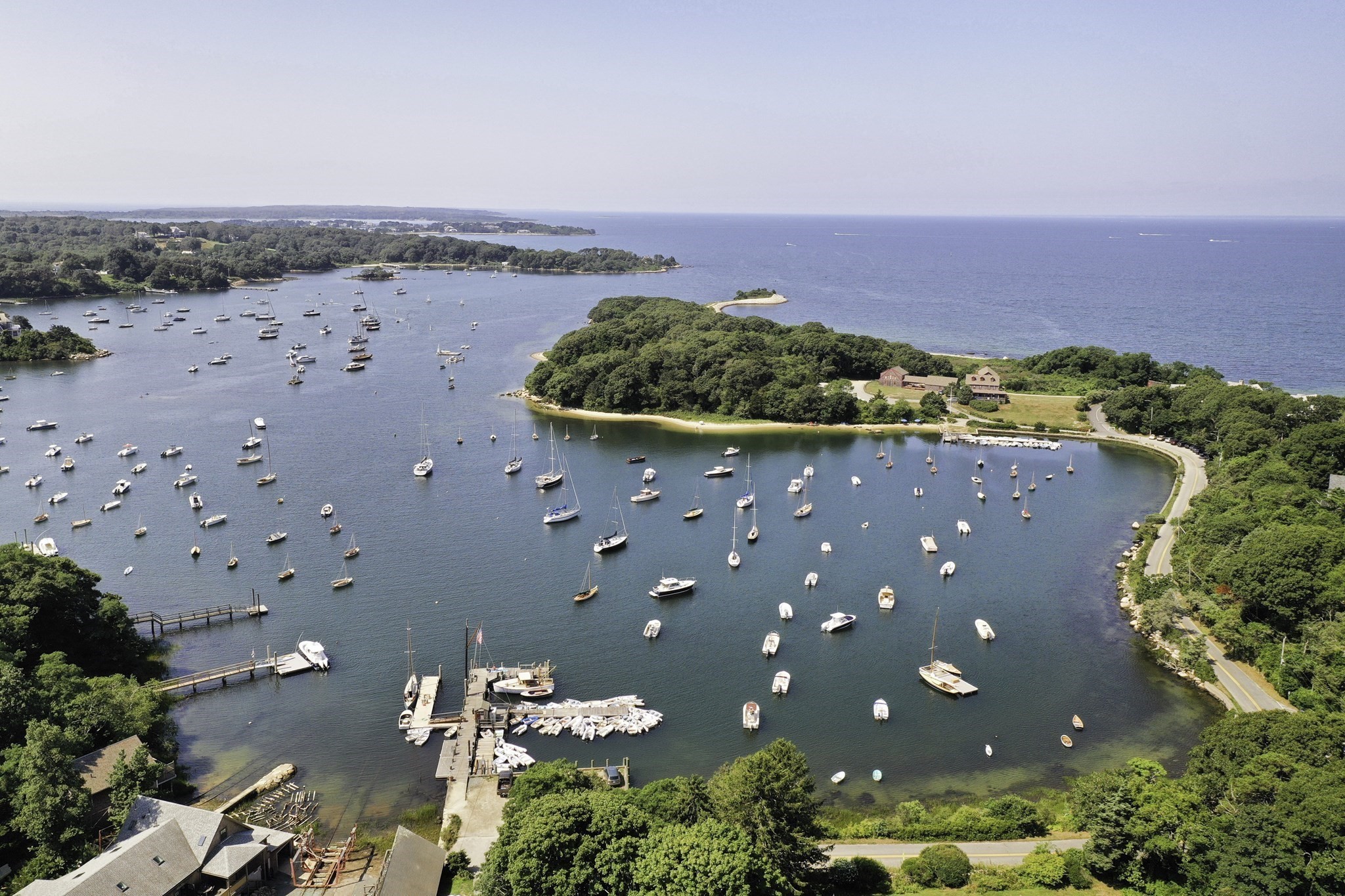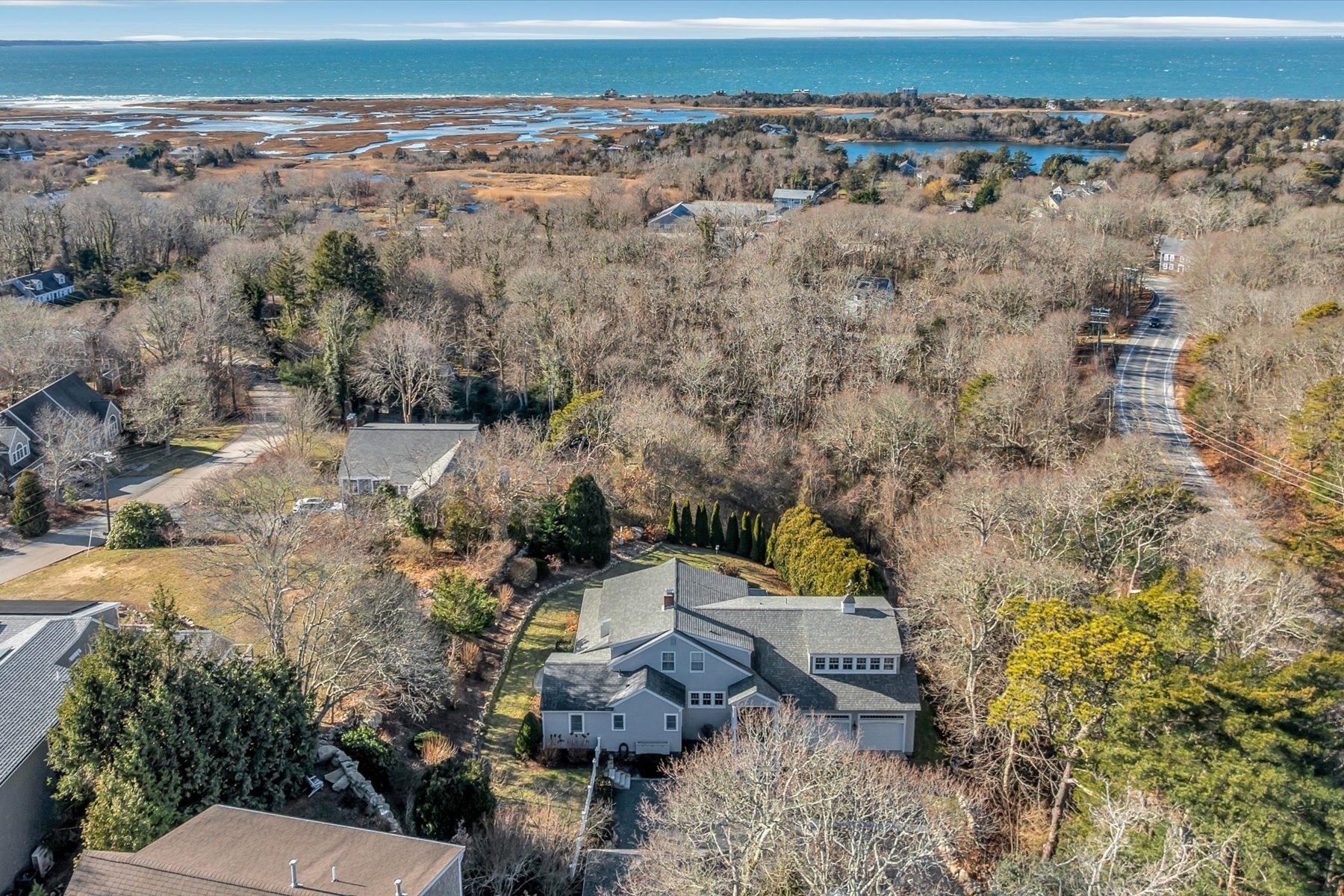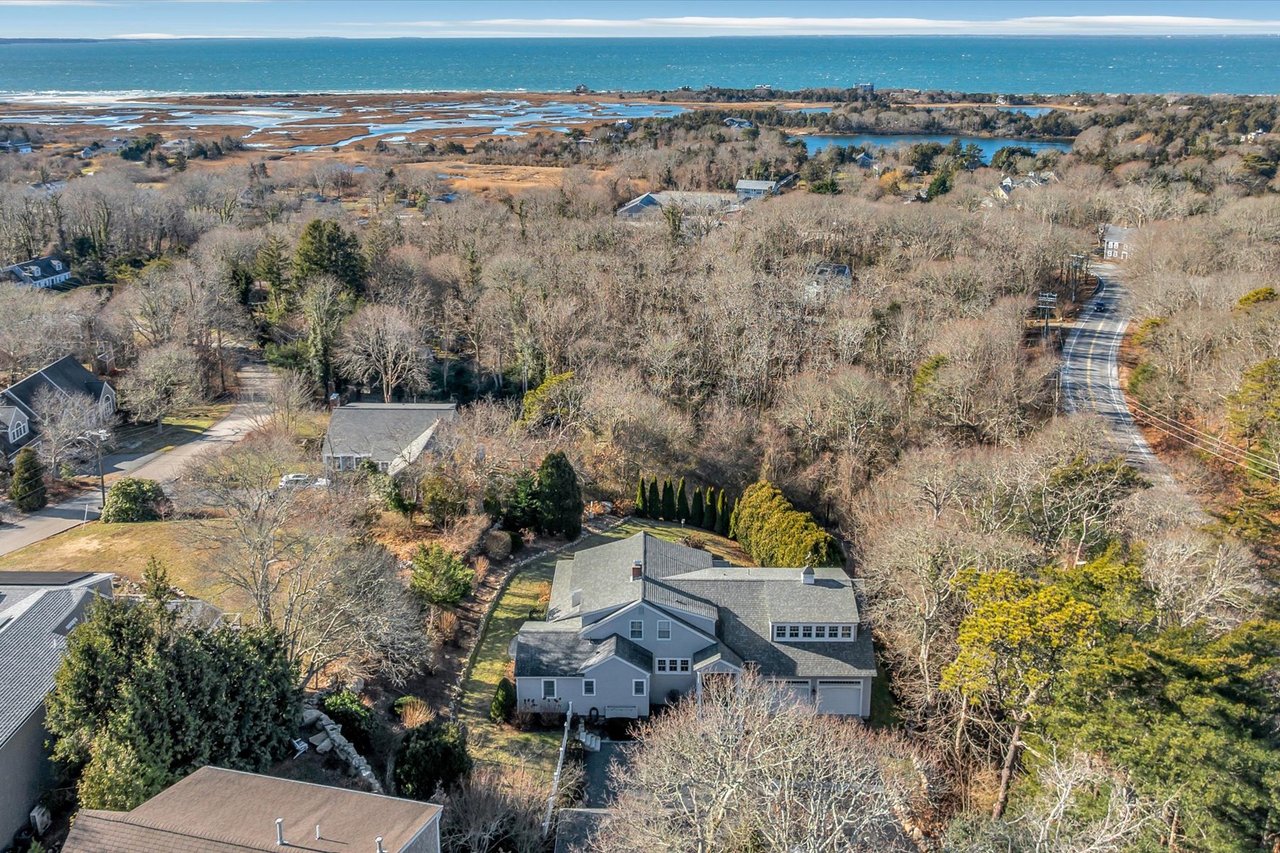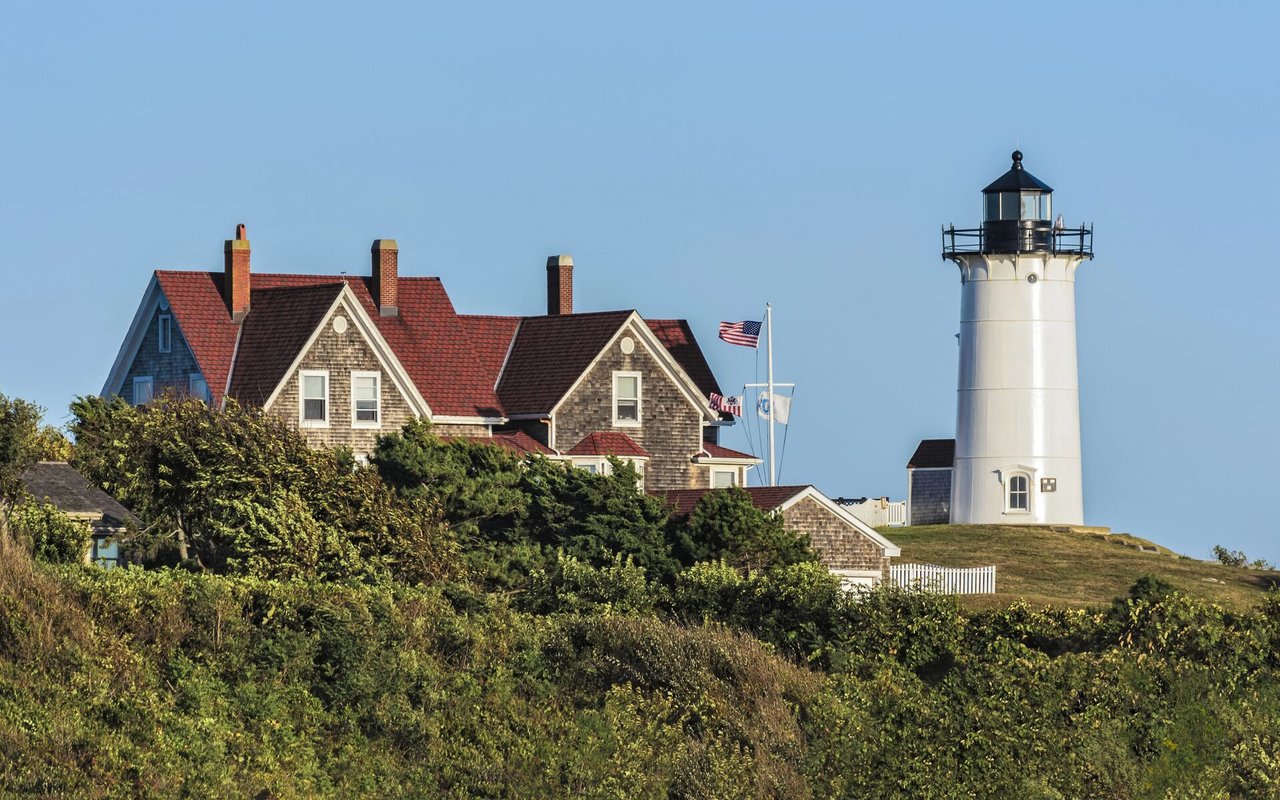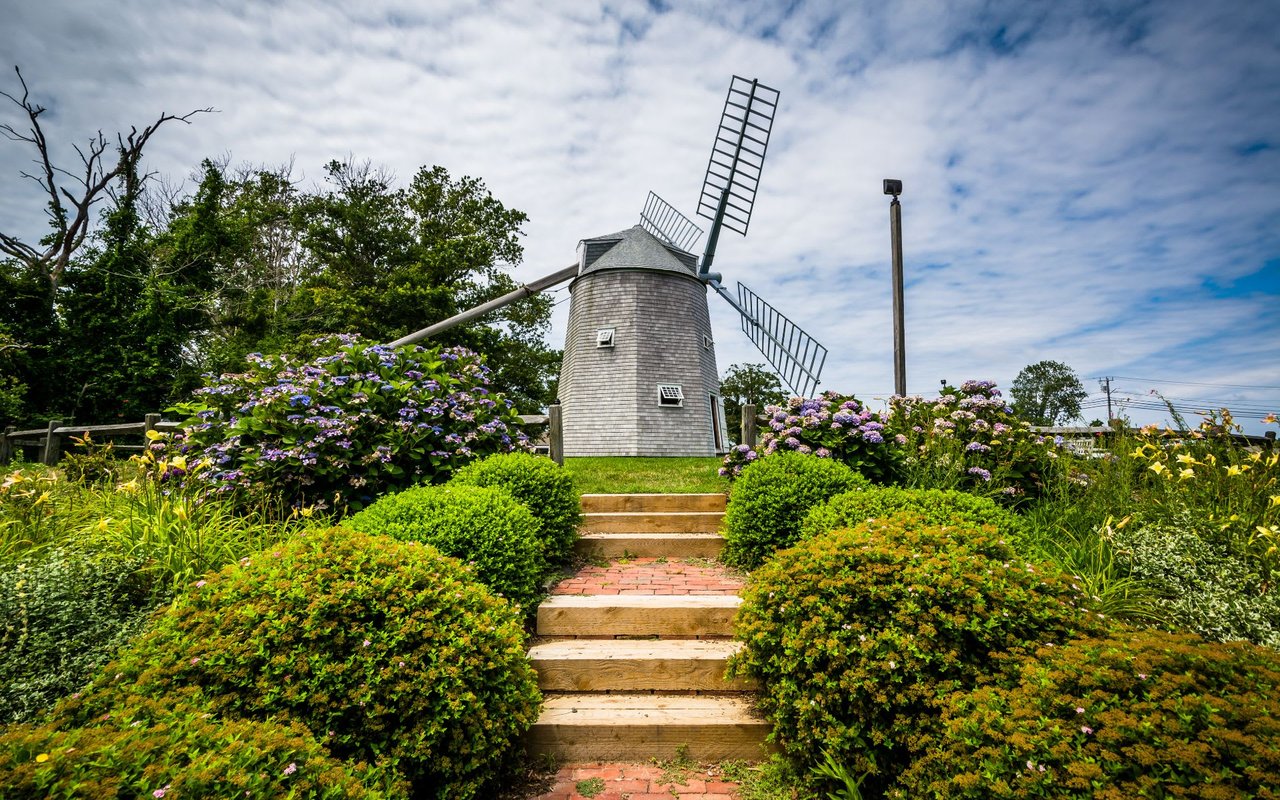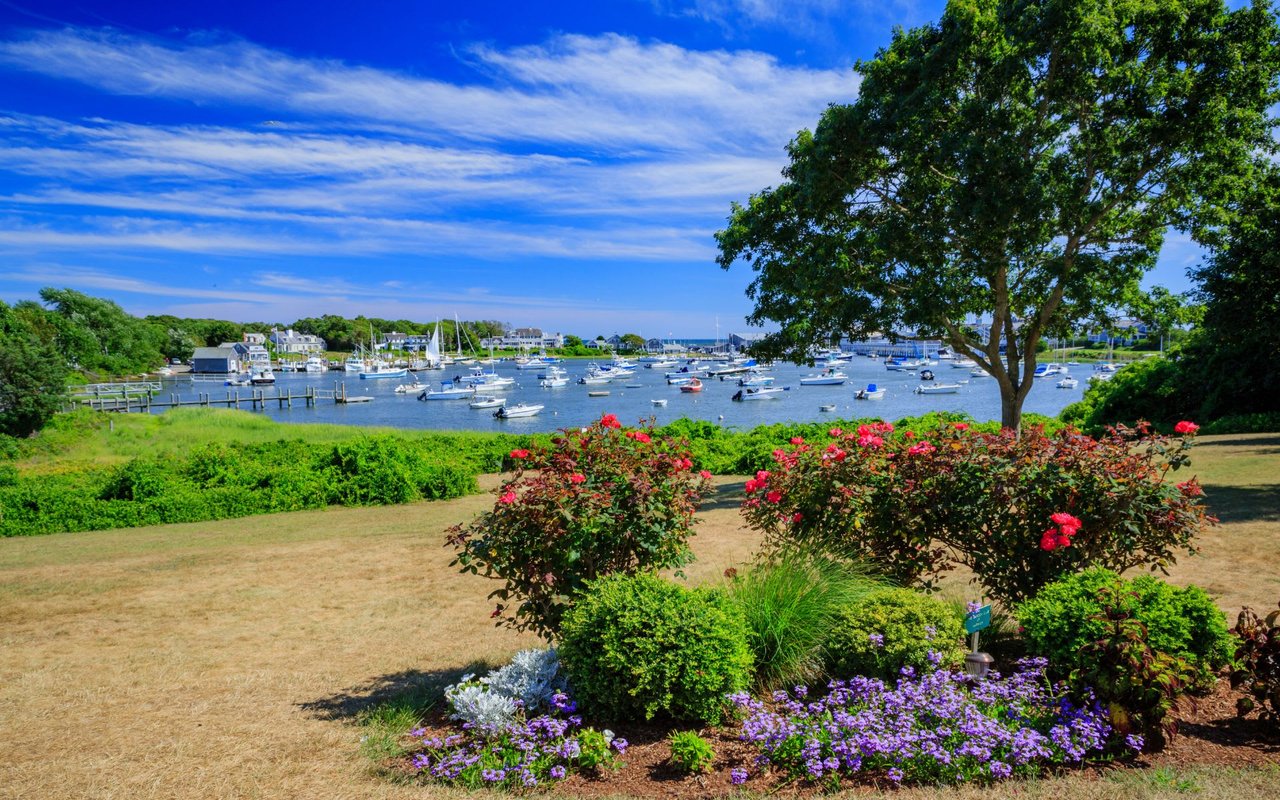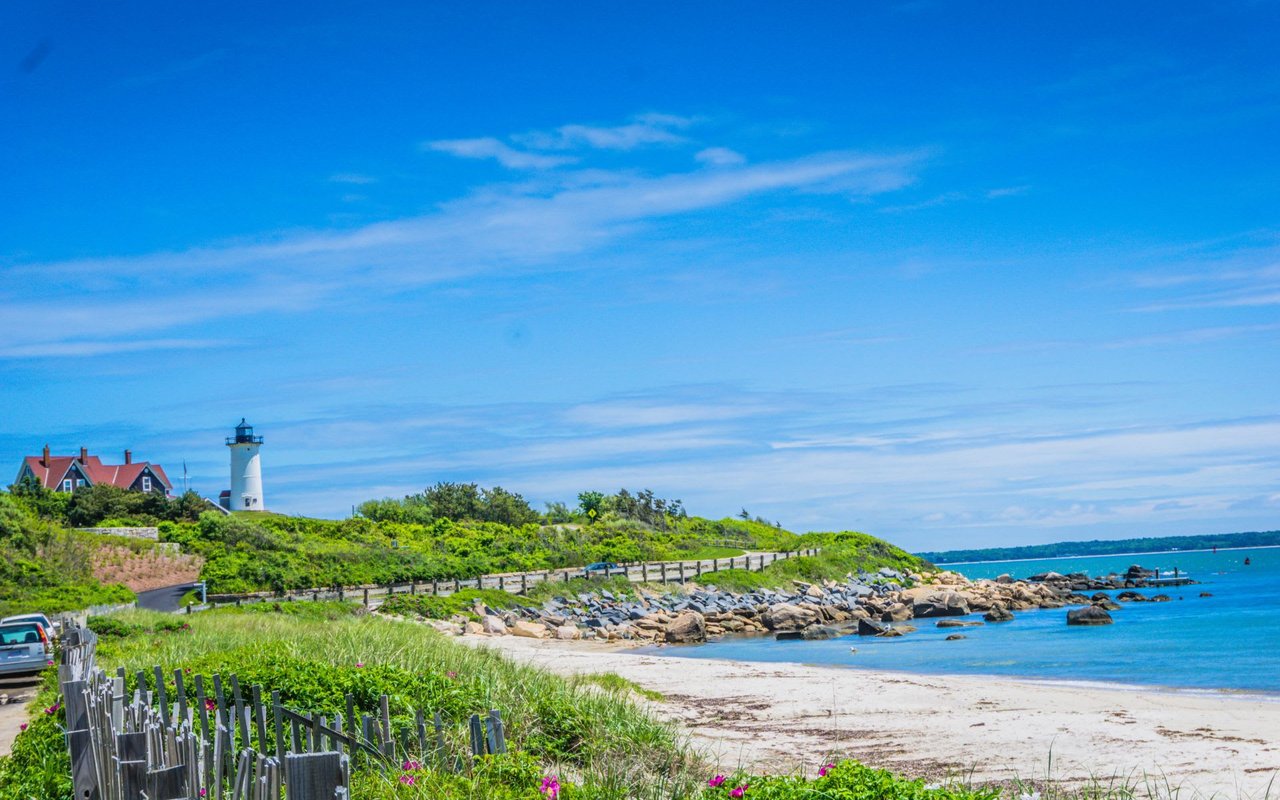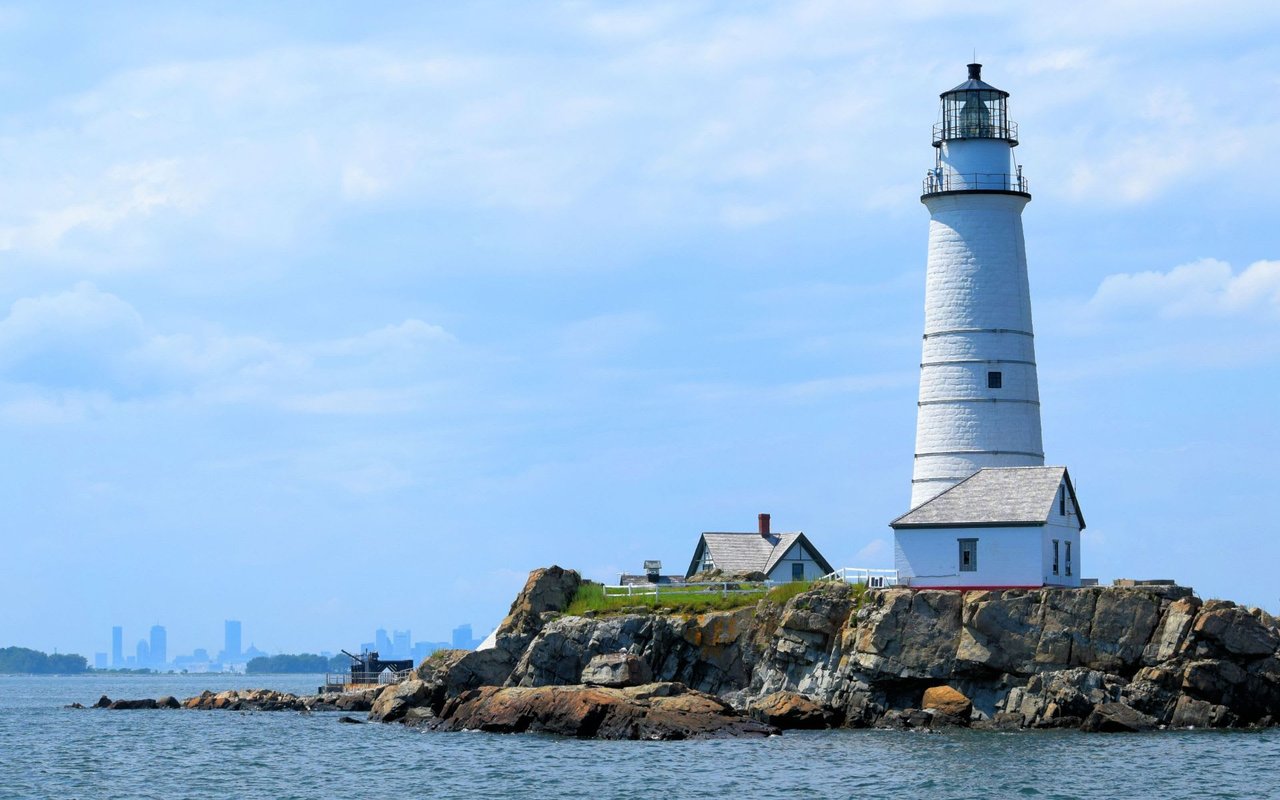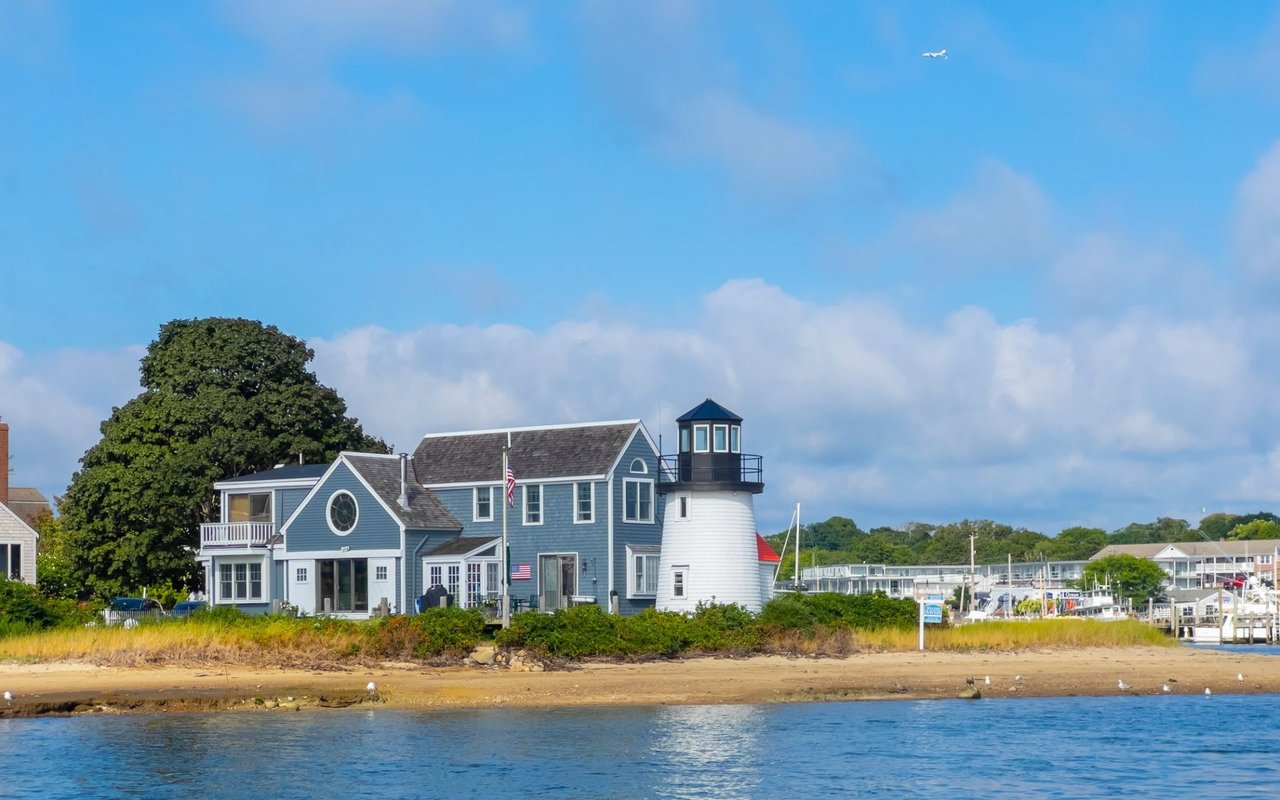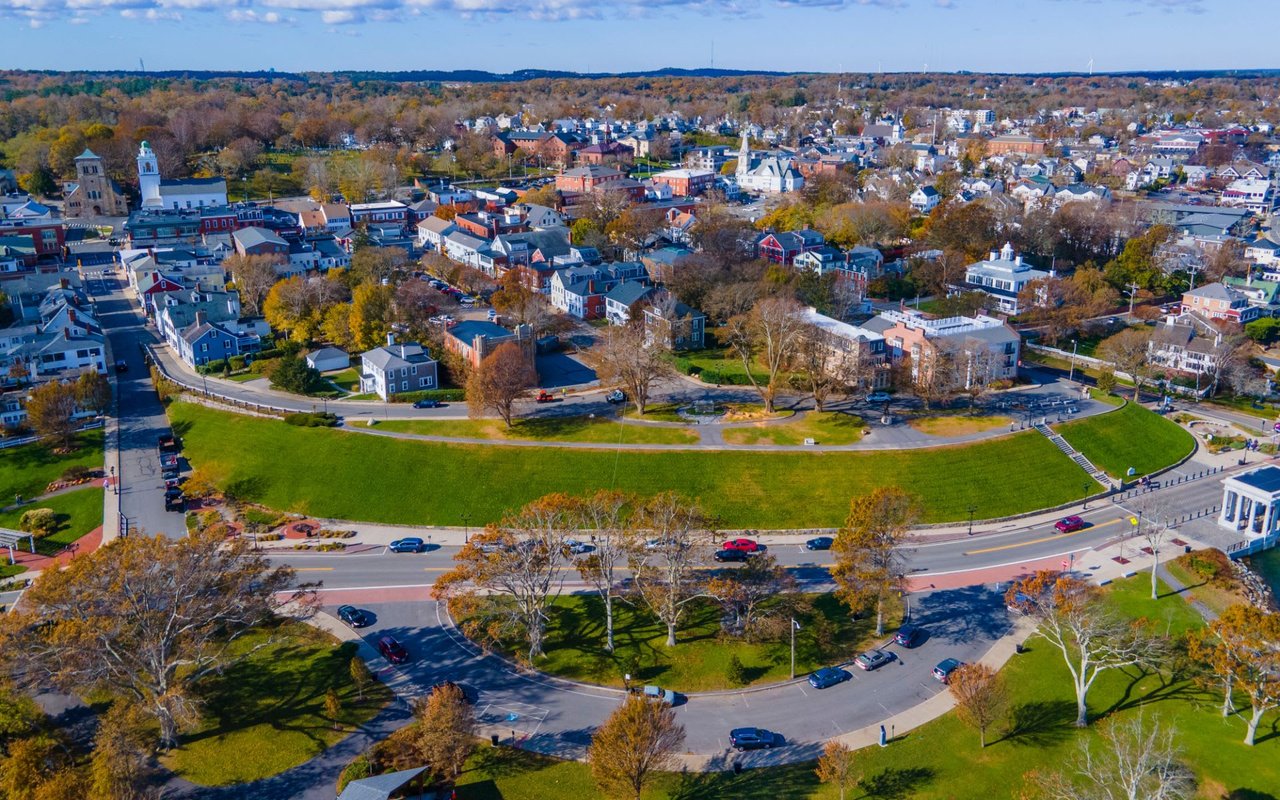
Falmouth occupies the southwestern corner of Cape Cod — the "Upper Cape" — with Vineyard Sound along its southern shore and Buzzards Bay to the west. At 44 square miles of land and 68 miles of coastline, it's the second-largest town on the Cape, and that scale matters more than most buyers expect. You can live two miles from a ferry terminal and a world-class research institution, or on a cranberry bog road with horses next door, and both addresses say "Falmouth."
The town holds a stable year-round population of roughly 32,500. From June through August, that number climbs past 100,000 between seasonal homeowners, vacation renters, and day-trippers. What separates Falmouth from towns further out on the Cape is what happens after Labor Day: Main Street stays open, the science labs keep running, and the grocery stores stay busy. Falmouth doesn't shut down — it exhales.
For buyers, the practical question isn't whether to be in Falmouth. It's which Falmouth.
Falmouth is one municipality divided into eight villages, each with distinct geography, price points, and daily rhythm. Understanding them is the single most useful thing you can do before you start touring homes.
Falmouth Village is the historic and commercial heart of town — a genuinely walkable Main Street with independent boutiques, restaurants, bakeries, and the Village Green anchoring it all. Buy here if you want to leave the car in the driveway.
Woods Hole sits at the southwestern tip: a small, internationally known scientific community home to the Woods Hole Oceanographic Institution and the Marine Biological Laboratory, plus the Steamship Authority terminal for ferries to Martha's Vineyard. Inventory is scarce and holds value unusually well.
East Falmouth is the largest village by land area, running inland and along a chain of salt ponds and rivers. Expect more suburban housing stock, cranberry bogs, farming history, and excellent boating and kayaking access. It's also where much of the town's attainable inventory lives.
West Falmouth is quieter and more scenic — historic homes along Buzzards Bay, Chapoquoit Beach, harbor views, and direct access to the Shining Sea Bikeway. This is one of Falmouth's premium addresses.
North Falmouth built its reputation on Old Silver Beach and its Buzzards Bay sunsets. The mix runs from historic homes to family neighborhoods to established summer colonies like Megansett.
Hatchville is inland north-central Falmouth: open space, equestrian farms, cranberry bogs, Cape Cod Country Club, and Coonamessett Farm. The most rural-feeling corner of town.
Teaticket sits between Falmouth Village and East Falmouth along Route 28 and handles the town's practical commerce — major grocery stores, plazas, and dense residential neighborhoods. Underrated for buyers who prioritize convenience and value.
Waquoit borders Mashpee on the eastern edge, centered on Waquoit Bay and the Waquoit Bay National Estuarine Research Reserve. A historic marine community with real nature-trail and boating access.
Falmouth's market runs on two engines at once: high demand for coastal second homes, and serious competition for year-round housing among locals and the science community. That combination keeps pressure on prices even in slower national cycles.
Segment | Typical Range |
|---|---|
Entry-level condos and inland starter homes (Teaticket, East Falmouth) | $450,000–$650,000 |
Mid-tier single-family | $750,000–$1.3M |
Overall town median | $850,000–$1.1M |
Prime coastal (West Falmouth, Woods Hole, waterfront necks) | $2M–$6M+ |
Supply is the defining constraint. Active listings town-wide consistently sit under 200 units, and turnkey properties routinely go under contract in less than 30 days. If you're waiting for inventory to loosen before you get pre-approved, you'll lose homes to buyers who didn't wait.
Timing is where local knowledge earns its keep. March through May is the busiest stretch, as buyers race to close before summer — the most competition and the most choice. June through August actually slows down; buyers switch into vacation mode and summer rentals make showings genuinely difficult to schedule. September through November is the quiet advantage: sellers who didn't move in summer recalibrate, foot traffic drops, and serious year-round buyers get room to negotiate. Some of the best deals I've written happened in October.
Nearly four centuries of building history left Falmouth with a deep, varied housing stock — and each style comes with its own maintenance and insurance realities.
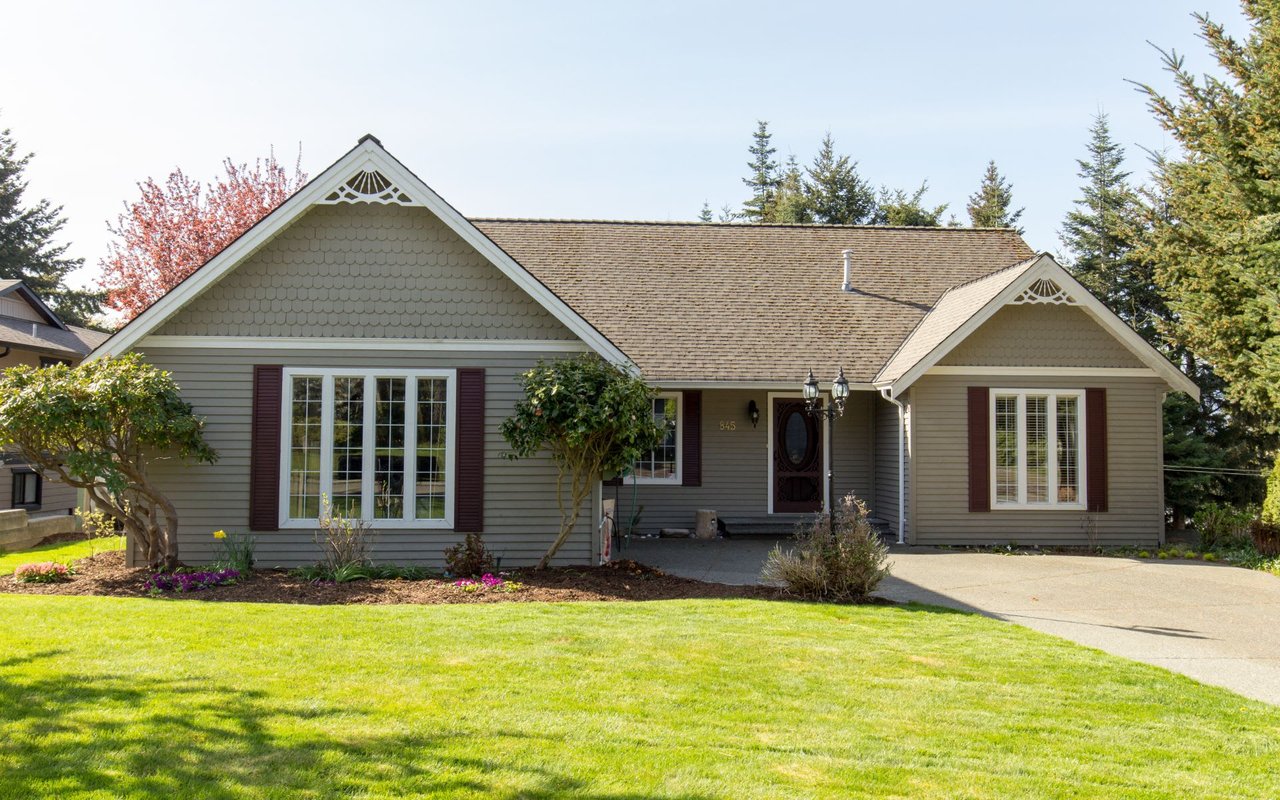
Classic Cape Cods are the local signature: symmetrical 1.5-story profiles, central chimneys, steep rooflines, cedar shingles. They appear in every village, from modest mid-century starters to heavily expanded modern versions.
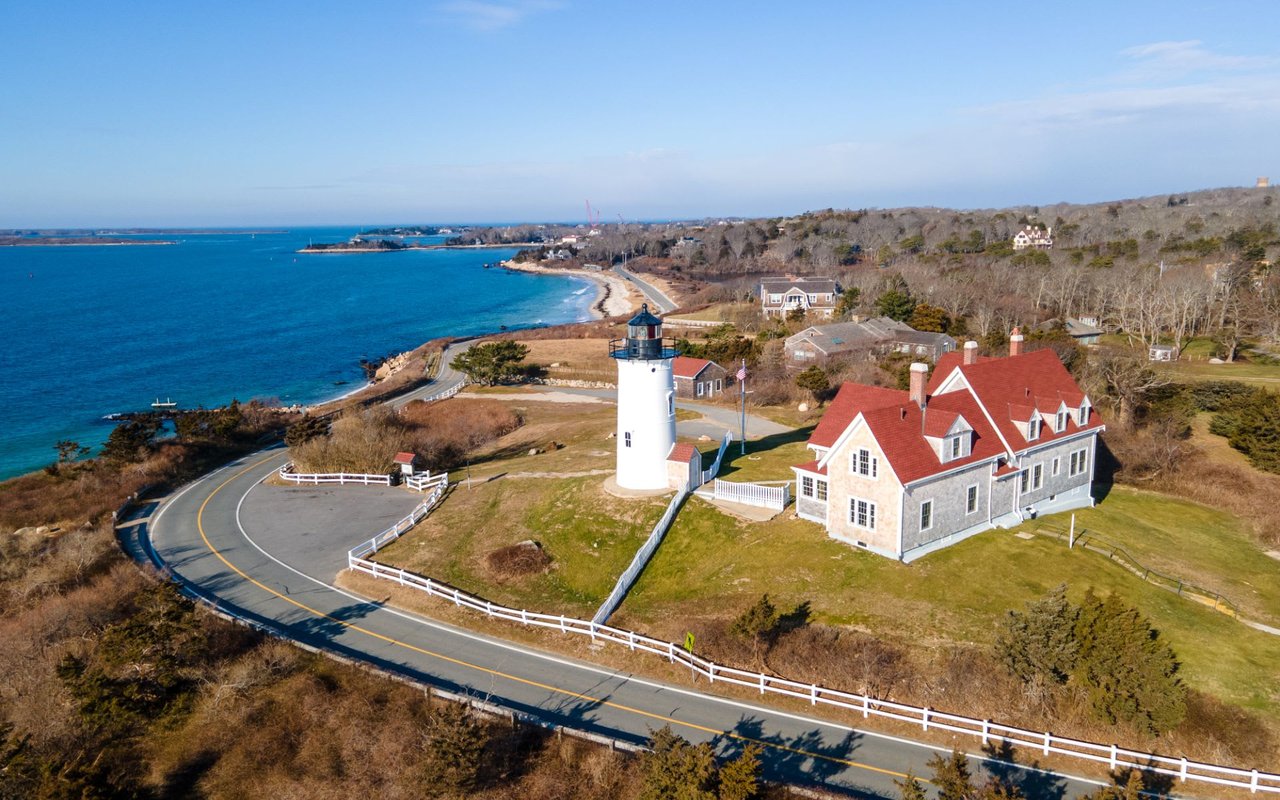
Shingled cottages and coastal gambrels cluster in Woods Hole, Quissett, and West Falmouth — weathered grey shingles, dormers, wrap-around porches, gambrel roofs built to take ocean wind.
Antique colonials and captains' homes concentrate near the Village Green and along historic corridors like West Falmouth Highway. Built in the 18th and 19th centuries, they offer formal floor plans, multi-pane windows, and period trim. They also require a buyer who understands older systems and historic-district considerations.
Waterfront new construction covers modern coastal builds and teardown replacements along the Sound and saltwater bays: open-concept layouts, floor-to-ceiling glass, elevated pilings for storm compliance, stone patios, private docks. These command the top of the market and increasingly set the standard for what luxury buyers expect.
"Waterfront" in Falmouth is not one product. The body of water changes the view, the wind, the boating, the insurance, and the price.
Vineyard Sound (south coast) brings warmer water, gentler wave action, and the iconic sightline across to Martha's Vineyard. Grand Avenue and Surf Drive deliver sweeping open-ocean panoramas — and take the brunt of winter coastal storms and erosion. Beautiful, and worth going in clear-eyed.
Buzzards Bay (west coast) is the sunset side: deeper water, reliable afternoon southwest breezes that sailors love, and properties perched on bluffs or tucked into low coastal coves through West Falmouth, Sippewissett, and North Falmouth.
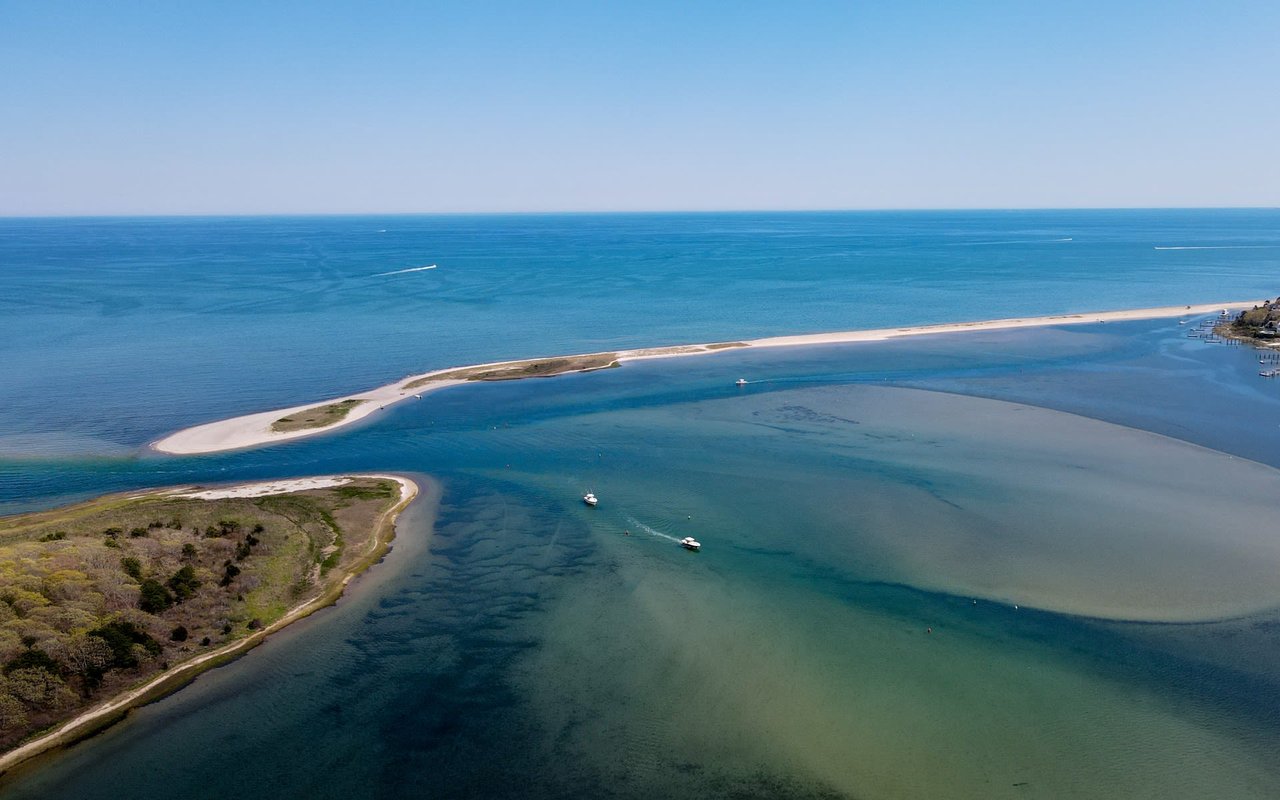
Harbors, rivers, and salt ponds — Waquoit Bay, Great Pond, Green Pond, Eel Pond, West Falmouth Harbor — offer sheltered conditions, private dockage potential, and the best paddling in town.
Freshwater ponds like Long Pond and Coonamessett Pond give you quiet, non-tidal waterfront surrounded by conservation land, usually at a lower entry price than salt water.
This is where buyers get burned, so read listing language carefully:
Two homes on the same street can carry very different values based solely on which of these four applies. Confirm it in the deed, not the marketing copy.
The town manages ten public beaches, and each has a different personality.
Beach | Water | Character | Access |
|---|---|---|---|
Old Silver | Buzzards Bay | Soft white sand, shallow warm water, sandbars; resident and public sides | Sticker or $30 daily; lot fills very early |
Surf Drive | Vineyard Sound | Vineyard views, calm tidal pools for kids, walkable from downtown | Sticker or $20 daily; full bathhouse |
Falmouth Heights | Vineyard Sound | Energetic, deep sandy shore, cliffside restaurants; Road Race finish line | Sticker only; limited street parking |
Chapoquoit ("Chappy") | Buzzards Bay | Narrow barrier beach between bay and salt marsh; the sunset spot | Sticker only; small lot |
Menauhant | Nantucket Sound | Secluded, long, split by a tidal creek into East and West | Sticker; East lot takes $20 daily |
Sticker rules matter more than buyers expect. Enforcement runs from late June through Labor Day. Full-time residents and property owners buy a seasonal sticker for roughly $40–$50 per vehicle, good at all ten town beaches. Non-resident visitors can buy weekly permits ($85/week up to about $225 for four weeks), a season pass ($275–$375), or pay at the gate at Old Silver, Surf Drive, and Menauhant East. Stickers are tied to a specific plate and registration — they don't transfer between cars, so plan for the boat trailer or the second vehicle.
Falmouth's downtown is a working Main Street, not a seasonal resort strip. That distinction shows up in your daily life in December.
Dining runs from upscale (The Glass Onion, La Cucina Sul Mare) to casual gastropubs (Añejo Mexican Bistro, The Quarterdeck), with Maison Villatte turning out some of the best bread on the Cape. Alongside the boutiques, bookshops, and home goods stores you'll find banks, law offices, medical practices, and the main branch of the Falmouth Public Library — the infrastructure of a real town.
For bulk errands, the Teaticket corridor along Route 28 handles the regional load: Stop & Shop, Shaw's, Trader Joe's, home improvement stores, and national pharmacies. Having Trader Joe's on-Cape is a bigger quality-of-life factor than it sounds.
Woods Hole is the reason Falmouth's economy behaves differently from the rest of the Cape.
Concentrated in a village you can walk across in fifteen minutes are the Woods Hole Oceanographic Institution (the largest independent oceanographic research institution in the U.S., operator of the submersible Alvin), the Marine Biological Laboratory (founded 1888, affiliated with the University of Chicago), NOAA's Northeast Fisheries Science Center (established 1871, the world's oldest marine fisheries lab), the USGS Woods Hole Coastal & Marine Science Center, plus the Woodwell Climate Research Center and SEA Education Association.
The effect on real estate is direct and measurable:
Falmouth's position on the Upper Cape gives it the best off-Cape access of any Cape town, along with the Cape's best island connections.
Route 28 is the main north–south artery, running as a divided four-lane highway from the Bourne Bridge into Falmouth, then narrowing south of Palmer Avenue into a commercial local road through downtown and east toward Mashpee. Route 151 (Nathan Ellis Highway) handles east–west traffic in northern Falmouth, linking Route 28 to Route 130 and Mashpee Commons.
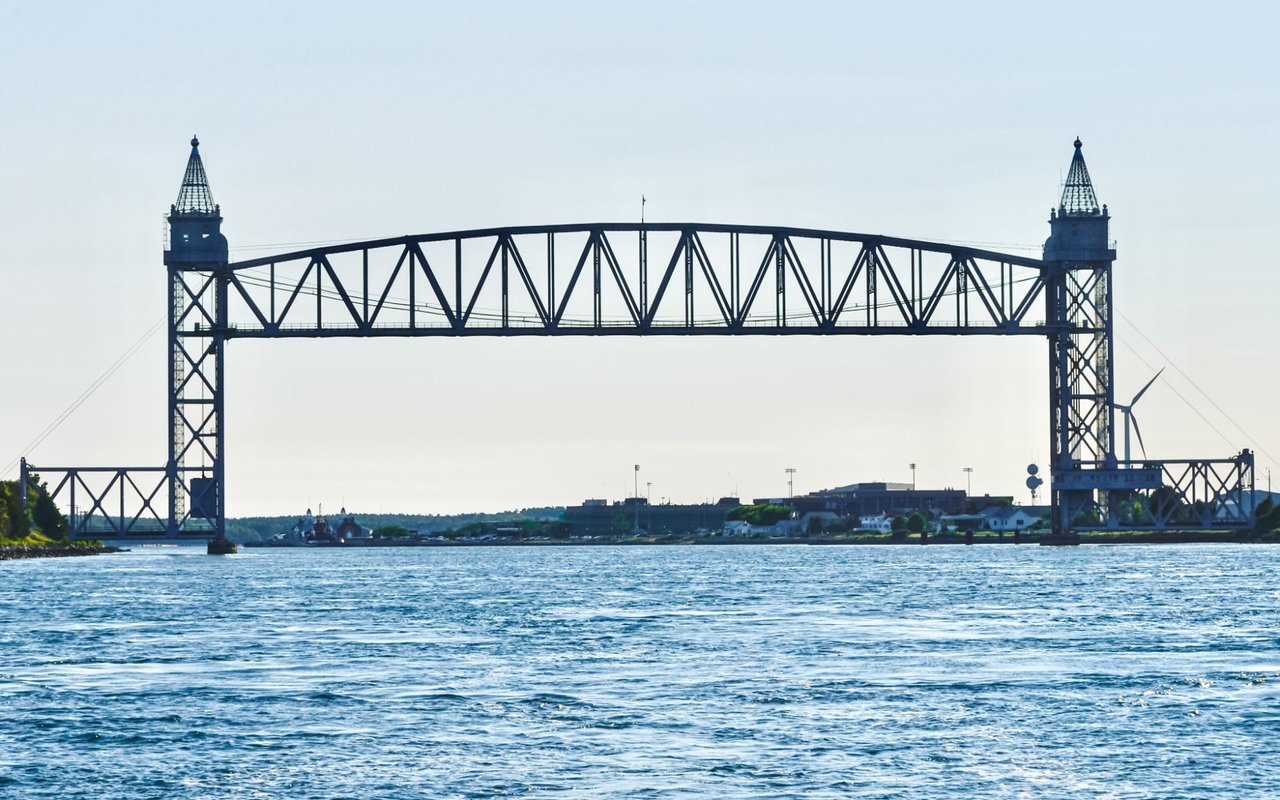
Be honest with yourself about the Bourne Bridge. Off-Cape travel funnels through it (with the Sagamore further east), and weekday peak hours and summer weekends require planning. Buyers who commute off-Cape regularly should test-drive the trip before they write an offer.
On the water, the Steamship Authority runs year-round passenger and vehicle ferries from Woods Hole to Vineyard Haven and Oak Bluffs. Seasonally, the Island Queen and Falmouth Commodore carry passengers from Falmouth Harbor to Oak Bluffs. For many second-home buyers, the ability to reach Martha's Vineyard in 45 minutes is part of the purchase decision.
Peter Pan Bus Lines runs daily express service from Falmouth Village and Woods Hole to Boston's South Station and Logan Airport. The CCRTA covers local routes including the Sealine up the Route 28 corridor to Hyannis, plus summer shuttles. The seasonal CapeFLYER train connects Boston to Hyannis on weekends. For flying, general aviation uses Falmouth Airpark (5B6), with commercial service out of Cape Cod Gateway (HYA) in Hyannis or Boston Logan.
Falmouth Public Schools serves roughly 3,000 students across seven facilities, organized in a way that keeps young kids close to home. Four neighborhood elementary schools cover K–4: Mullen-Hall, East Falmouth, North Falmouth, and Teaticket. Morse Pond School handles grades 5–6, Lawrence School grades 7–8, and Falmouth High School grades 9–12 with AP coursework and strong athletics. Students also have access to Upper Cape Cod Regional Technical High School in Bourne for trade pathways from marine technology to carpentry and electrical.
Because elementary assignment follows neighborhood, school preference should shape which village you shop in — not the reverse. This is worth mapping before you tour.
Private options include Falmouth Academy, an independent college-preparatory day school for grades 7–12 near the Village with notable science partnerships and arts programming, plus Heritage Christian Academy and Cape Cod Montessori School.
For higher education, Cape Cod Community College has its main campus in West Barnstable with satellite offerings. More unusually, the Woods Hole cluster means graduate students from MIT and the University of Chicago conduct research and take doctoral coursework right here in town year-round.
Falmouth protects an unusual amount of open space for a town with this much coastline, backed by active municipal preservation and The 300 Committee Land Trust.
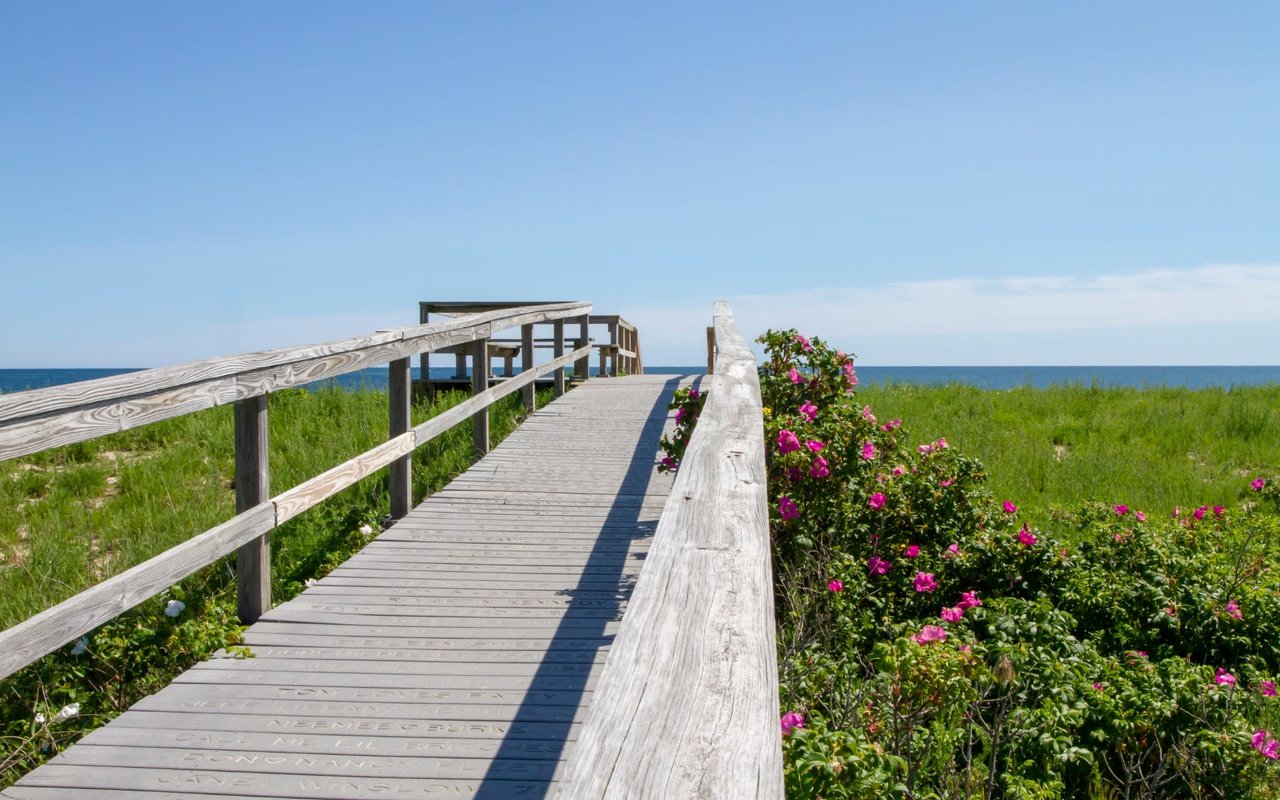
The Shining Sea Bikeway is the crown jewel — 10.7 paved miles from North Falmouth down to Woods Hole along a former railroad right-of-way. It's the only bike path on Cape Cod that runs directly along the oceanfront, threading past cranberry bogs, salt marshes, and Vineyard Sound beaches. Proximity to the Bikeway is a genuine value factor on listings.
Beebe Woods gives you 383 acres of forested conservation land minutes from downtown near Highfield Hall, with miles of dog-friendly trails through glacial terrain, deep hollows, and Punch Bowl Pond. Washburn Island is 330 undeveloped acres inside Waquoit Bay, managed by the state Estuarine Research Reserve and reachable only by private boat, kayak, or paddleboard — remote beaches, hiking, and primitive coastal camping.
On the water, deep-water access out of Woods Hole and Falmouth Harbor makes this a serious base for sailing, charter fishing, and island runs, while the sheltered salt ponds handle paddleboards and small craft. Golfers have Cape Cod Country Club (public, inland in Hatchville), Falmouth Country Club, and nearby Ballymeade and The Ridge Club.
Falmouth runs on a four-season rhythm, and knowing it tells you a lot about whether the town fits you.
June through August is peak: population above 100,000, outdoor concerts, and the ASICS Falmouth Road Race in August — a world-famous 7-mile point-to-point from Woods Hole along the coast to Falmouth Heights, drawing over 10,000 runners, elite international athletes, and crowds lining the route.
September through October is what locals quietly call "second summer," and many residents consider it the best part of the year. The water stays warm, traffic disappears, and the weather holds mild well into fall.
December brings Falmouth Holidays by the Sea Weekend: caroling at Woods Hole harbor, Santa arriving by boat, the lighting of the Village Green, and a downtown holiday parade.
November through April returns the town to its baseline 32,500. Some beachfront clam shacks and seasonal shops close, but Main Street, the Woods Hole labs, and the Teaticket commercial hubs run at full strength. Winter in Falmouth is a season, not a shutdown — which is precisely why so many people who tried other Cape towns end up here. Spring brings Town Meeting and the real estate surge, and the cycle starts again.
Choosing between eight villages, four kinds of waterfront, and four distinct buying seasons is not something to figure out on your own. Lynn O'Neill is a second-generation Realtor with more than 20 years of experience who grew up in Falmouth, attended Falmouth schools, and lifeguarded at Falmouth beaches. She was the #1 agent on the Upper Cape by sales volume in 2021 (exceeding $47 million), has been ranked among RealTrends' Top 50 Agents in Massachusetts, and holds the CRS and Certified Luxury Home Marketing Specialist designations. In 2022, she formed the O'Neill Group at Berkshire Hathaway HomeServices Robert Paul Properties to bring together top agents under one roof — the team ranked #1 across Cape Cod that year.
If you're weighing waterfront exposure on Vineyard Sound against a sheltered salt pond, trying to understand what a deeded access right is actually worth, or simply want an honest read on whether to buy this spring or wait for October, we'd like to hear from you.
Lynn O'Neill | O'Neill Group
Berkshire Hathaway HomeServices Robert Paul Properties
279 Main St, Falmouth, MA 02540
[email protected] | (508) 524-7325
3,996 people live in Falmouth, where the median age is 63.1 and the average individual income is $63,138. Data provided by the U.S. Census Bureau.
Total Population
Median Age
Population Density Population Density This is the number of people per square mile in a neighborhood.
Average individual Income
Falmouth has 2,110 households, with an average household size of 1.83. Data provided by the U.S. Census Bureau. Here’s what the people living in Falmouth do for work — and how long it takes them to get there. Data provided by the U.S. Census Bureau. 3,996 people call Falmouth home. The population density is 1,913.86 and the largest age group is Data provided by the U.S. Census Bureau.
Total Population
Population Density Population Density This is the number of people per square mile in a neighborhood.
Median Age
Men vs Women
Population by Age Group
0-9 Years
10-17 Years
18-24 Years
25-64 Years
65-74 Years
75+ Years
Education Level
Total Households
Average Household Size
Average individual Income
Households with Children
With Children:
Without Children:
Marital Status
Blue vs White Collar Workers
Blue Collar:
White Collar: