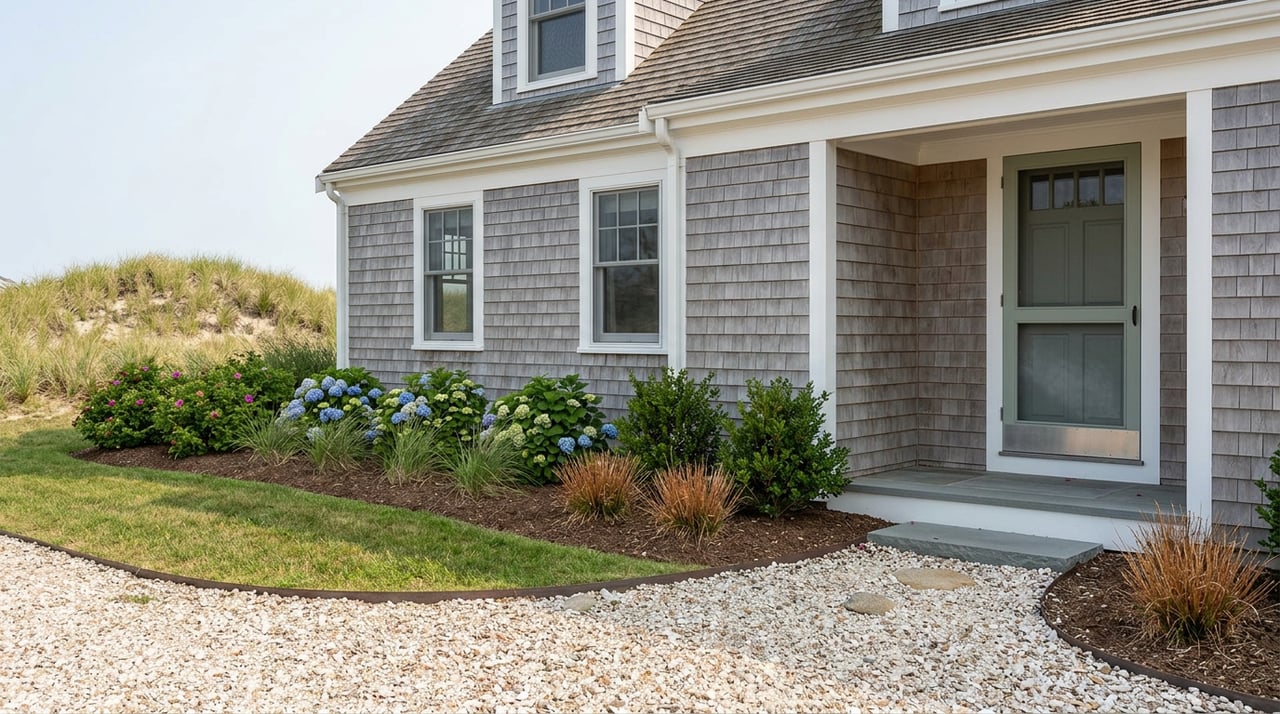
Drive south on Beach Road toward Nauset Beach this month and the Nauset Spit Residents OSV area is open to over-sand vehicles under its standard operating rules. Turn around and try to run a sprinkler on your own front lawn, and you are breaking town bylaw. That contrast, not a new restaurant or a First Friday band, is the actual story of Orleans in August 2026. The rules did not get uniformly tighter or looser this year. They split, and knowing which way each one split is the difference between a smooth week and a fine, or a wasted trip to the beach lot.
The beach trail reopened while the town next door stayed shut
Every spring, the same stretch of barrier beach that runs from Orleans down toward Chatham fills with nesting piping plovers, and every spring the towns that share it have to decide how much vehicle access they can allow without disturbing the chicks. This year the two towns landed in different places.
Nauset Beach South closed to over-sand vehicles at 8 PM on May 29, the standard move to protect nests with chicks that had not yet fledged. Natural Resources Officer Keegan Burke counted 36 plover pairs on the south side of Nauset Beach this season, with the first egg hatching just after Memorial Day. The Nauset Spit "Residents" OSV area reopened at sunrise on June 12 under standard operating rules, 15 PSI enforced, vehicles parked perpendicular to the water, and as the season's broods fledged the town went on to lift its Habitat Conservation Plan protocols for Nauset Beach South entirely, ending the nesting-related vehicle restrictions there for the rest of the year.
A few miles north, Chatham's section of the same beach, known locally as North Beach, has not been so fortunate. Nesting activity there ran dense enough this season, with multiple broods of plovers and least terns arriving in the same stretch of sand, that the town was unable to reopen its own Habitat Conservation Plan through much of the summer. Same species, same barrier beach, different outcomes, because nesting density is a local variable, not a townwide rule.
The Nauset North stretch on the Orleans side tells a related story. It remains closed to OSV access not because of plovers but because there is no drivable beach left after a rough winter and spring of erosion. The town has said it is watching daily for beach-building over the summer that might restore some access on that side, but as of now, driving north of the trail system is not an option no matter how the plover count shakes out.
Your own backyard estuary has more restrictions than the beach does
If the beach loosened, the water closer to home tightened. As of June 12, several sections of the Nauset Estuary remain closed to shellfishing until further notice. Town Cove is closed south of a line running from the seaward end of the Cove Road municipal pier to the marker posted in the southeast corner below Sea Call Farm. The area within 25 feet of the drainage pipe on the Goose Hummock bulkhead is closed outright. And the stretch from the western edge of the paved ramp at Asa's Landing out to the point of rocks, seaward to 3 feet of depth at low water, is open to family permit holders only, not the general shellfishing public. Additional restrictions apply around Mill Pond as well.
None of this made headlines the way a beach closure does, but if you have spent August evenings quahogging in Town Cove in past years, this is the summer that habit runs into a posted closure sign instead.
The hose rules are the strictest they have been in years
The Board of Water and Sewer Commissioners voted unanimously on March 18 to impose mandatory limits on nonessential outdoor water use, effective May 1 through December 31. That end date matters. Last year's mandatory restrictions, tied to a Level 2 significant drought designation, ran only through September 30 and still permitted two days a week of sprinkler irrigation. This year's version is both longer and stricter: automatic sprinklers are off the table entirely. Outdoor watering is limited to a handheld hose or drip irrigation, and only outside the hours of 9 AM to 5 PM, in practice the window between 5 PM and 9 AM.
Washing a car in the driveway, hosing down a deck, or topping off a pool all count as nonessential and are prohibited under the same bylaw. The town has been direct about enforcement: a first violation gets a warning, repeat violations escalate to fines. The cause is a winter that did not deliver enough snow to recharge the groundwater the town depends on, and the restrictions apply to private wells as well as town water, which catches some longtime residents off guard since they assume a well makes them exempt.
What this actually costs, and what still runs on schedule
If you are budgeting for the rest of the season, the numbers worth knowing are the 2026 beach parking rates, which apply to both Nauset and Skaket. The schedule breaks down like this:
- Daily parking pass: $35
- Weekly sticker: $165
- Nonresident season sticker: $420
- Resident or Orleans real-estate-taxpayer sticker: $35
That last line is the one worth sitting with. A resident or taxpayer sticker costs the same as a single daily pass for a visitor, and it is valid through the current cycle, which runs to June 30, 2027. Daily enforcement runs from mid-June through Labor Day, 7:30 AM to 4:30 PM, with parking free after that. If you have been paying daily rates out of habit, that math stops making sense fast.
Nauset also remains one of the more heavily monitored stretches of shoreline on the Cape for a different reason. A June 2025 report documented 13,896 individual shark detections at Nauset North over the course of a year, with 45 distinct sharks identified. The town and the Atlantic White Shark Conservancy run a "Be Shark Smart" program there, with color-coded flags and Stop the Bleed kits on site, and the Sharktivity app is worth having on your phone before a swim regardless of which side of the plover debate your beach day falls on.
None of the restrictions have touched the parts of Orleans summer that run on their own calendar. Orleans First Friday still happens the first Friday of June, July, August, and September, with shops and restaurants open late, live music, and a free trolley running through downtown, plus a Holiday Edition added this year on December 4. The Cape Cod Rail Trail still cuts through town for anyone biking or running rather than driving. And Cooke's Seafood, open for its 51st year since 1976, is still serving the same fried and broiled seafood it always has, drought or no drought.
The pattern underneath all of it
What ties the beach, the estuary, and the water bylaw together is not a town growing more restrictive across the board. It is a town managing several separate resources, each with its own pressure and its own recovery timeline. The plover population dictates the beach. The groundwater table dictates the hose. Whatever is driving the estuary closures dictates the clam rake. Assuming last year's rules still apply to any one of them is the mistake that costs people a wasted trip or a fine this year.
That kind of attention, knowing which specific rule governs which specific piece of property, is the same instinct that matters when residents start thinking about their own home down the road, whether that means understanding water bylaws before landscaping a new yard or knowing what a beach access easement is actually worth. If a summer of shifting closures has you thinking about what else has changed in Orleans lately, or what any of this means for a property you already own, the team at O'Neill Group knows this town well enough to walk through it with you.
This article is general information, not legal, tax or financial advice. Consult a qualified professional about your situation.